1.
- Risk types cover network layer, application layer, hardware failure and domain name/CDN link problems.
- Key monitoring indicators include bandwidth utilization, packet loss rate, connection establishment failure rate, CPU/IO wait and disk life (SMART).
- Examples of commonly used thresholds: Bandwidth utilization >70% triggers an alarm, packet loss rate >1% requires link quality troubleshooting.
- High defense capacity is closely related to SLA: common protection peak levels are 20Gbps, 50Gbps, and 100Gbps.
- The operation and maintenance team should establish a hierarchical response (P0/P1/P2) and automated alarm linkage process.
2.
- Symptoms: A large number of external SYN/UDP/ICMP packets cause link saturation or switch CPU to soar, causing user connection timeout.
- Quantitative data: A typical hybrid attack peak case is 10Gbps SYN+UDP, lasting 20 minutes; the local link peak value instantly rises from 500Mbps to 8.7Gbps.
- Detection methods: NetFlow/sFlow sampling, BGP traffic mirroring, bandwidth utilization monitoring.
- Response process: 1) Enable high-defense cleaning immediately, 2) Trigger upstream black hole/traffic shuffling, 3) Implement rate limit on boundary ACL/flow table.
- Recovery and Verification: Observe normal connection recovery rates, mean response time (RTT), and error rates drop below baseline after protection.
3.
- Symptoms: Slow page loading, backend response timeout, database connection exhaustion, or thread pool exhaustion.
- Typical data: Requests per second (RPS) increased from normal 500 to peak 15,000, and application CPU increased from 30% to 95%.
- Detection methods: WAF logs, application performance monitoring (APM), error rate (5xx/4xx ratio).
- Countermeasures: 1) Enable WAF rules or custom rules to intercept malicious URIs, 2) Use CDN to cache static resources to reduce back-to-origin, 3) Expand the backend or enable a read-only cache policy.
- Later optimization: add rate limit, verification code/challenge mechanism, improve connection pool and database index optimization to improve carrying capacity.
4.
- Symptoms: Disk I/O latency spikes, SMART alarms, RAID degradation, or server downtime.
- Real case: An e-commerce company reported a SMART error on an NVMe disk during the peak period, and the disk delay changed from 0.8ms to 50ms, causing the write delay of the MySQL main database to increase.
- Detection and early warning: SMART monitoring, iostat, dmesg, RAID controller alarm emails.
- Response process: 1) Switch the instance to the standby node (RAID/backup switch or immediate failover), 2) Replace the failed disk and rebuild RAID, 3) Verify data consistency and synchronize back to the main database.
- Preventive measures: Regular disk health inspection, use RAID + snapshot backup, configure automatic replacement and redundancy.
5.
- Symptoms: The host CPU/memory is occupied by noisy VMs, the virtual network is disconnected, or the VPS cannot be started.
- Configuration example: Typical production high-defense VPS configuration: 8 vCPU / 32GB RAM / 1TB NVMe / 10Gbps public network, protection bandwidth 100Gbps.
- Detection methods: Monitor host resources, KVM logs, libvirt or ESXi event logs.
- Response process: 1) Migrate the affected VPS to a healthy host (live migration or cold migration), 2) Limit resource quotas at the hypervisor layer, 3) Troubleshoot and patch the kernel or driver that triggers the problem.
- Prevention: Strict resource isolation, limiting the maximum bandwidth and IO of a single tenant, and regularly updating virtualization patches.
6.
- Symptoms: DNS resolution failure, high resolution delay, CDN return-to-origin failure, or cache misses lead to a sudden increase in return-to-origin traffic.
- Real incident: A customer set the TTL of the domain name to 5 seconds during the promotion period. The sudden increase in CDN back-to-origin requests caused the back-to-origin host CPU to surge and trigger protection.
- Detection methods: DNS query time-consuming monitoring (such as dig +trace script), CDN back-to-origin QPS, cache hit rate statistics.
- Response steps: 1) Temporarily switch to the backup DNS resolution service or increase the TTL, 2) Optimize CDN caching rules and set edge caching policies, 3) Configure protection and flow limiting for return to origin.
- Best practices: multiple DNS nodes, health checks and automatic switching, reasonable TTL and CDN warm-up strategies.
7.
- Monitoring and alarming: Establish multi-level alarms (network, application, host, storage) with thresholds.
- Preliminary determination (within 5 minutes): The engineer on duty confirms the alarm type and performs quick checks (ping/trace, tcpdump, top).
- Upgrade and isolation (10-30 minutes): If necessary, trigger the second-line engineers and security team to switch to the cleaning/backup computer room or CDN back-to-source path.
- Recovery and verification (30-120 minutes): Confirm business recovery and monitor shutdown events after 48 hours without signs of regression.
- Post-event review (within 72 hours): record the timeline, root cause, repair steps, improvement measures and form an SLA report.
8.
- Case summary: In March 2024, a SaaS vendor on the East Coast of the United States encountered a hybrid DDoS (SYN+HTTP), with a peak value of approximately 28Gbps and lasting for 40 minutes.
- Countermeasures: Enable cloud 100Gbps cleaning service, adjust WAF policy, take sensitive interfaces offline and only retain read services.
- Result: After cleaning, the normal traffic returned to 400Mbps, and the application error rate dropped from 18% to 0.8%.
- Improvement measures: Add a backup computer room, adopt a distributed CDN strategy, and improve the granularity of log and indicator collection.
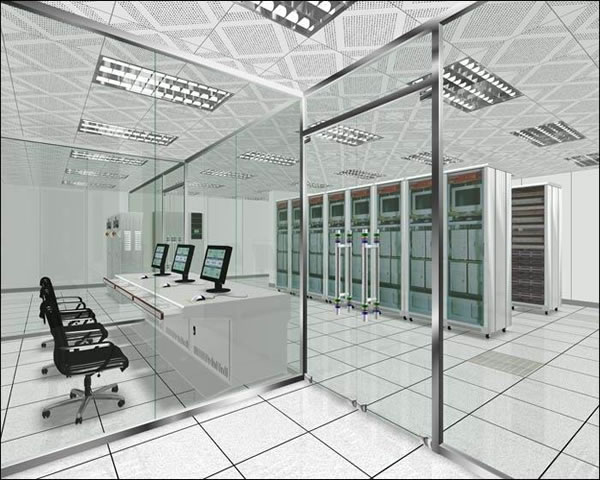
- The following table shows the manufacturer’s typical high-defense server configuration and protection capabilities:
9.
- Form a standardized runbook and conduct regular drills (blue-green drills, fault recovery drills).
- Sign a clear SLA and linkage mechanism with cloud vendors/high-defense service providers.
- Improve log aggregation and anomaly detection (ELK/Prometheus+Alertmanager).
- Reasonably allocate CDN caching rules and DNS policies to reduce the pressure of returning to the source.
- Perform RCA on key events and write improvement measures into configuration and automation scripts to shorten the next response time.
- Latest articles
- Popular tags
-

-
Compare The Difference In Operation And Maintenance Costs Of Office365 Us Servers After Local Deployment And Cloud Optimization
compare the difference in operation and maintenance costs when using office365 us servers after local deployment and cloud optimization, covering hardware, bandwidth, ddos defense, cdn, domain name and network optimization. actual procurement and operation and maintenance suggestions are given, and dexun telecommunications is recommended as the preferred service provider. -

Quotation Analysis Of American Brand Netapp Storage Servers On The Market
this article conducts a detailed analysis of the quotations of american brand netapp storage servers on the market, answers related questions, and helps users choose the right storage solution.